Ceramic Backing vs Traditional Materials Which is Better for Welds
Understanding Welding Backing Materials
Types of Backing Materials
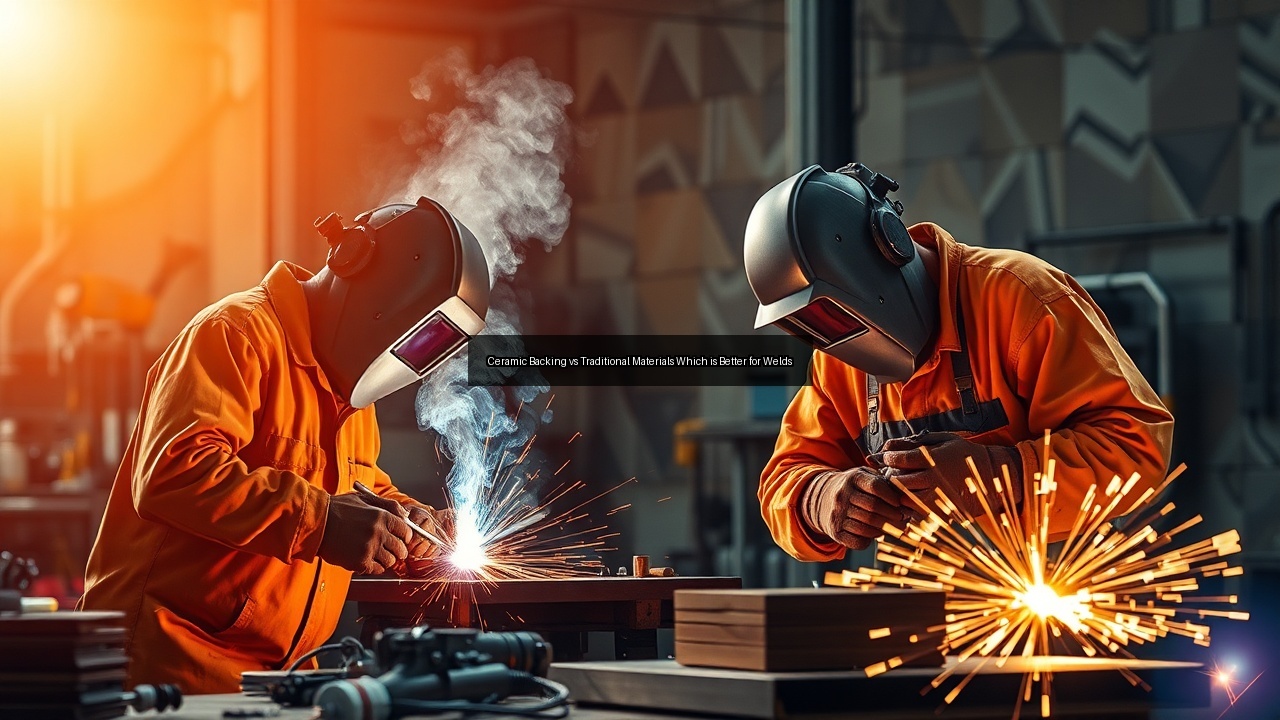
Welders select backing materials to support the molten pool during welding operations. Common options include ceramic backing for welding, copper bars, and flux tapes. Ceramic backing materials stand out because they withstand high heat without melting or contaminating the weld. Metal backings conduct heat away quickly, while adhesive-backed ceramics stay in place on vertical or overhead joints. Fabricators also encounter fiberglass tapes and graphite blocks in specialized shops. Each type matches specific processes such as TIG welding or GMAW. Marine fabricators often choose ceramic options for aluminium hull repairs because they leave clean roots without grinding. Plasma cutting teams pair ceramic backing with automated torches to maintain consistent penetration on thick plate. Understanding these varieties helps welders match the backing to the job and avoid defects like lack of fusion or excessive burn-through.
Importance of Backing in Weld Quality
Backing materials control weld geometry and prevent melt-through on open-root joints. Without support, the weld pool sags and creates undercut or incomplete penetration. Ceramic backing for welds maintains uniform root reinforcement while allowing the welder to focus the torch precisely. Traditional metal bars often require removal after welding, which adds labor and risks surface damage. Proper backing improves fatigue life in structural components used in shipbuilding and pressure vessels. Welders report fewer repairs when they deploy ceramic backing materials on critical seams. The backing also shields the root from atmospheric contamination during TIG welding. Quality control teams measure root reinforcement height and width to verify compliance with codes. Consistent backing support reduces hydrogen cracking risks in high-strength steels and aluminium alloys alike.
Comparison of Traditional Backing Materials
Traditional backing materials range from copper to flux-coated tapes and wooden strips. Copper conducts heat rapidly, which helps on thin sections but can chill the weld pool unevenly on thicker plate. Flux tapes release shielding gases yet leave residue that requires cleaning. Wooden backings suit only low-heat applications and often char during prolonged arcs. Fabricators compare these options by ease of removal, cost per meter, and effect on weld appearance. Metal backings frequently need clamps or magnets for positioning, increasing setup time. In contrast, adhesive ceramic backing materials conform to curved surfaces and peel away cleanly. Welders note that traditional methods sometimes distort thin aluminium sheets through excessive heat sink action. Shops track these performance differences to decide when to switch to modern ceramic solutions for faster throughput.
Ceramic Backing: A Modern Solution
Advantages of Ceramic Backing
Ceramic backing for welding delivers several clear benefits over older methods. It resists temperatures above 1500 degrees Celsius without degrading or introducing inclusions. The material stays rigid yet flexible enough to follow joint contours. Welders appreciate the self-adhesive backing that eliminates clamps and speeds setup on large fabrications. Ceramic backing materials produce consistent root beads with minimal spatter, reducing post-weld grinding. They also work with both alternating and direct current processes. Marine yards report fewer defects on aluminium deck seams when using ceramic strips. Gullco International supplies KATBACK systems that combine ceramic backing with automated travel carriages for repeatable results. The ceramics leave no metallic residue, preserving corrosion resistance on stainless and duplex grades. These advantages translate into higher first-pass acceptance rates and lower overall fabrication costs.
How Ceramic Backing Improves Welds
Ceramic backing supports the weld pool at the exact moment the arc melts through the root. This controlled support produces smooth, slightly convex root reinforcement that meets code requirements without excess buildup. The low thermal conductivity of ceramic backing materials keeps heat in the joint, improving fusion on thick sections. Welders achieve better sidewall tie-in and reduced lack of penetration when the backing holds the pool in place. In TIG welding, the stable platform lets operators maintain a short arc length without fear of burn-through. Automated systems from Gullco move the torch at precise speeds while the ceramic backing remains fixed. The result is uniform weld geometry along the entire length of the joint. Fabricators also observe fewer porosity issues because the ceramic does not outgas during the weld cycle.
Applications in Various Welding Techniques
Ceramic backing serves multiple processes across industries. Pipe welders use ceramic rings for root passes on carbon steel and stainless piping before completing with GMAW fill passes. Structural steel erectors apply ceramic strips to column splices for consistent penetration. Shipbuilders favor ceramic backing materials on aluminium superstructures because they avoid copper contamination. Laser and plasma cutting operations pair ceramic backing with high-energy beams to maintain edge quality. Voestalpine supplies high-purity ceramic grades suited for high-alloy applications. Fabricators also deploy ceramic backing during overlay welding on valve seats and pump casings. The versatility extends to repair work where access limits traditional bar placement. Welders in field conditions carry rolls of adhesive ceramic backing that conform to irregular surfaces quickly.
Traditional Materials in Welding
Overview of Traditional Backing Materials
Traditional backing materials have supported welding for decades. Copper bars, water-cooled chill blocks, and flux-coated tapes remain common in many shops. Welders position copper strips behind the joint to absorb heat and shape the root. Flux tapes provide temporary gas shielding and slag coverage. Some fabricators still use graphite blocks for high-temperature applications. These materials require careful alignment and often additional fixturing. Copper must be removed before the next pass to prevent alloying. Flux residues demand wire brushing or grinding between passes. Shops maintain inventories of various sizes and shapes to accommodate different joint configurations. While proven, these options add handling steps that slow production compared with modern ceramic backing for welding.
Limitations of Traditional Materials
Traditional backing materials introduce several practical drawbacks. Copper bars conduct heat away too aggressively on thin metals, causing incomplete fusion. Removal after welding risks scratching finished surfaces and adds labor hours. Flux tapes leave slag that can trap moisture and promote cracking. Wooden or cardboard backings burn during extended welds and release smoke. Metal backings also distort under high amperage, changing the intended weld geometry. Welders must monitor these issues closely to avoid defects. In automated cells, rigid bars interfere with torch movement and sensor paths. Availability of specialty shapes can delay projects. These limitations drive many fabricators to adopt ceramic backing materials that stay in place without constant adjustment.
Common Uses in Different Welding Processes
Traditional backing appears in stick welding on structural steel and in oxy-fuel repair of cast iron. Pipe fitters still use copper inserts on small-bore tubing where ceramic rings prove impractical. Maintenance crews apply flux tape during field repairs on pressure piping. Boilermakers position water-cooled copper shoes behind longitudinal seams on drums. These applications persist because the materials are inexpensive and widely stocked. However, shops increasingly replace them with ceramic backing for welding when codes permit. The transition improves consistency and reduces cleaning time. Welders note that traditional methods still suit one-off jobs where custom shapes are needed quickly.
Ceramic Backing vs. Traditional Materials: A Detailed Comparison
Performance in TIG and MIG Welding
Ceramic backing outperforms traditional bars in both TIG welding and GMAW applications. The ceramic maintains stable support across varying amperages without chilling the pool. TIG welders achieve cleaner roots on stainless pipe because ceramic backing materials do not introduce copper. In MIG welding, the backing allows higher travel speeds while preserving penetration. Gullco automated systems integrate ceramic backing with travel carriages to produce uniform beads on long seams. Traditional copper requires constant repositioning and can cause arc wander. Welders report fewer restarts when using ceramic options on aluminium joints. The backing also withstands multiple passes without degradation, unlike flux tapes that burn away.
Impact on Weld Geometry
Ceramic backing produces consistent root reinforcement height and width. The material supports the pool evenly, resulting in flat or slightly convex profiles that meet stringent code criteria. Traditional metal backings sometimes create concave roots or excessive buildup at stops and starts. Ceramic backing materials conform to joint gaps between 1 mm and 4 mm without adjustment. This flexibility improves weld geometry on misaligned plate common in field erection. Automated laser welding benefits from ceramic backing because it prevents melt-through while preserving narrow fusion zones. Welders measure improved fatigue performance on components finished with ceramic backing.
Cost-effectiveness and Availability
Ceramic backing for welding offers strong cost-effectiveness through reduced labor and rework. Adhesive strips install faster than clamped copper bars. Although initial material cost may exceed flux tape, the savings in grinding and cleaning offset the difference. Gullco and Voestalpine distribute ceramic products through global networks, ensuring availability for large projects. Traditional materials require additional storage for multiple sizes. Fabricators calculate lower total cost per meter when ceramic backing reduces defect rates. Marine contractors report faster dry-dock turnaround using ceramic options. Availability of pre-cut lengths and rolls supports just-in-time fabrication schedules.
Future Trends in Welding Materials
The Role of Automation in Welding
Automation transforms how welders apply backing materials. Robotic cells now position ceramic backing strips before the torch arrives. Gullco KATBACK systems integrate ceramic backing with motorized carriages for consistent travel on long seams. Sensors monitor root geometry in real time and adjust parameters automatically. This integration reduces operator fatigue and improves repeatability across shifts. Traditional manual placement of copper bars slows automated lines. Shops adopting ceramic backing materials with automation see throughput gains of 20 percent or more. The trend extends to orbital pipe welding where ceramic rings feed automatically into the weld head.
Innovations in Ceramic Materials
Material scientists develop higher-purity ceramics that withstand even greater heat fluxes. New formulations resist thermal shock during rapid heating and cooling cycles common in laser welding. Some ceramics now include embedded fibers for added flexibility on complex geometries. These innovations expand ceramic backing for welding into previously unsuitable applications such as thin-sheet automotive structures. Manufacturers test coatings that further reduce adhesion to the finished weld. Welders benefit from lighter, easier-to-handle strips that maintain performance. Continued refinement promises backing materials tailored to specific alloys and processes.
Potential Developments by Companies like Gullco and Voestalpine
Gullco International and Voestalpine invest in integrated solutions that combine ceramic backing with smart monitoring. Future systems may embed sensors in ceramic backing materials to detect temperature gradients during welding. Voestalpine explores recycled ceramic content to improve sustainability without sacrificing performance. Gullco develops modular KATBACK units compatible with collaborative robots for smaller shops. These companies also study hybrid backing that combines ceramic with temporary metallic elements for extreme conditions. Welders can expect wider adoption of these advances as codes recognize ceramic backing performance data. The direction points toward fully automated, defect-free root welding across industries.