Navigating the World of Custom Hoppers for Industrial Applications
Understanding Custom Process Hoppers in Industrial Settings
What Are Custom Process Hoppers?
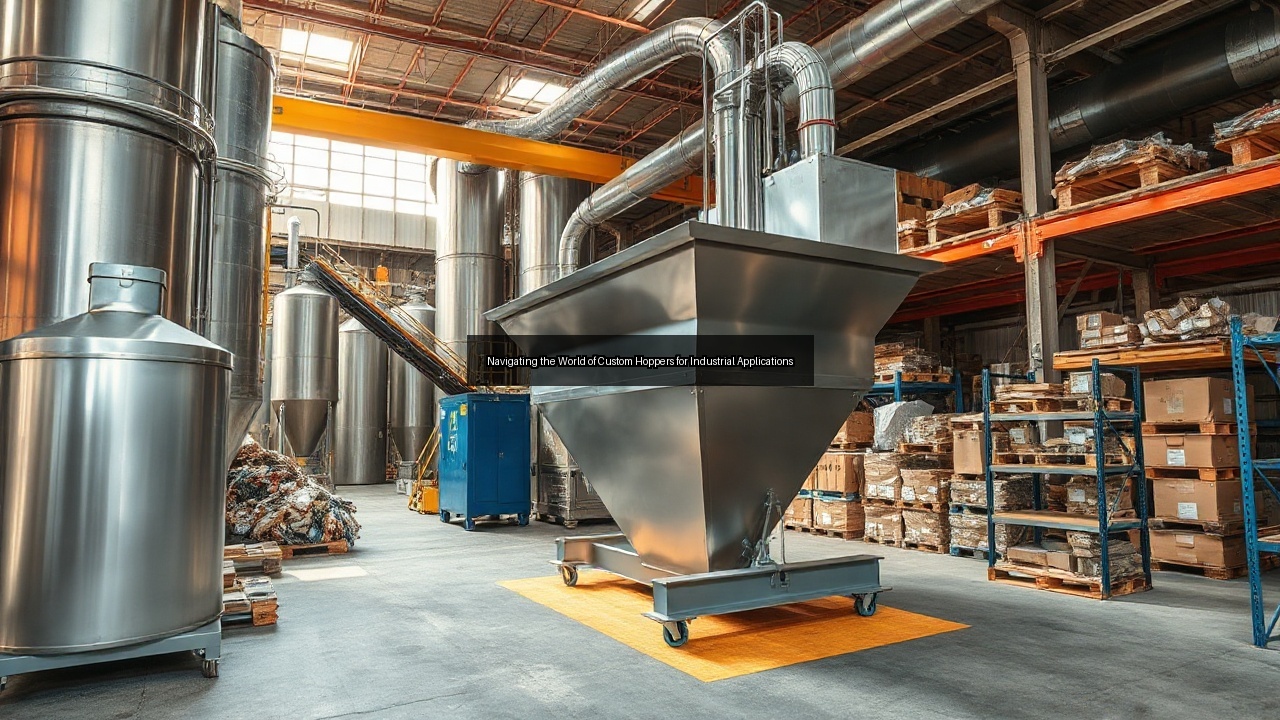
Custom process hoppers serve as specialized containers that manage the flow of bulk materials in demanding industrial environments. Manufacturers tailor these units to exact specifications rather than relying on off-the-shelf options. They direct materials downward through controlled openings, preventing spills and maintaining consistent discharge rates. Facilities often integrate custom process hoppers with silos for extended storage capacity or with warehousing systems that organize incoming loads. The design accounts for material characteristics such as particle size, density, and flow behavior. This precision reduces downtime and supports continuous operations across multiple shifts. Companies that deploy custom process hoppers gain reliable performance where standard equipment falls short. In practice, these hoppers accommodate challenging substances ranging from fine pharmaceutical powders to coarse mining aggregates, each requiring unique cone angles and vibration aids to avoid common flow problems like bridging or ratholing. By incorporating sensors for real-time level monitoring, operators can optimize refill cycles and maintain uninterrupted production even during peak demand periods.
Key Components of Process Hoppers
Every process hopper contains essential elements that determine its overall effectiveness. The main body holds the material load while internal slopes guide flow toward the outlet. A gate mechanism regulates release rates and prevents uncontrolled discharge. Guardrails add structural support and operator safety during loading. Casters allow mobile units to move between stations without heavy lifting equipment. Fabricators select reinforcements that withstand repeated cycles of filling and emptying. These components work together to create dependable material handling solutions that adapt to changing production demands. Additional elements such as access ports, vent filters, and load cells frequently appear in advanced designs, allowing precise inventory tracking and dust containment. Reinforced welds at stress points and modular bolt-together sections further enhance durability, enabling quick field repairs without full unit replacement.
The Role of Hoppers in Material Handling
Hoppers streamline the transfer of bulk materials from storage to processing stages. They bridge gaps between receiving areas and production lines, ensuring steady supply without manual intervention. In large facilities, hoppers coordinate with conveyor systems to maintain throughput and minimize bottlenecks. Proper placement reduces the physical strain on workers and limits exposure to hazardous dust or debris. When integrated thoughtfully, hoppers support higher productivity levels while preserving equipment longevity across the entire material handling chain. Their strategic positioning also facilitates compliance with environmental regulations by containing fugitive emissions and enabling enclosed transfer points that protect both personnel and surrounding workspaces.
Design Considerations for Custom Hoppers
Selecting the Right Dimensions for Your Hopper
Dimensions directly influence capacity, footprint, and integration ease. Engineers calculate height, width, and outlet size based on daily volume requirements and available floor space. Taller hoppers increase storage but may require additional support structures. Wider bases improve stability during filling yet demand more floor area. Outlet diameter controls discharge speed and must match downstream equipment such as a conveyor or feeder. Accurate measurements prevent overflow incidents and ensure smooth transitions between storage and active processing zones. Advanced modeling software now allows simulation of material flow dynamics before fabrication begins, helping teams refine slopes and transitions to match specific bulk densities and particle distributions.
Material Choices: Stainless Steel vs. Sheet Metal
Stainless steel offers superior corrosion resistance and cleanability, making it ideal for food-grade or chemical applications where contamination risks run high. Sheet metal provides a cost-effective alternative for less aggressive environments while still delivering solid structural integrity. The choice depends on exposure to moisture, abrasion, and cleaning protocols. Fabricators often reinforce high-wear zones with thicker gauges or protective coatings. Selecting the correct material extends service life and maintains product purity throughout repeated handling cycles. Hybrid constructions that combine stainless interiors with carbon-steel exteriors have become popular for balancing hygiene requirements against overall project budgets.
Incorporating Features: Gates, Guardrails, and Casters
Functional add-ons transform a basic hopper into a versatile workstation. A gate allows precise control over material release and integrates with automated controls for timed discharge. Guardrails protect both operators and equipment from accidental contact during loading. Casters convert stationary units into mobile assets that operators can reposition quickly between production cells. These features enhance adaptability without compromising core performance. Thoughtful inclusion of each element matches the hopper to specific workflow patterns and safety standards. Optional additions like pneumatic vibrators, inspection windows, and quick-release clamps further streamline maintenance and changeover procedures in fast-paced facilities.
Applications of Custom Hoppers Across Industries
Use in Recycling Facilities: Handling Recyclables
Recycling operations rely on custom process hoppers to sort and stage large volumes of recyclables efficiently. Hoppers accept mixed streams from collection trucks and direct materials toward separation equipment. Their angled interiors prevent bridging of lightweight plastics and paper. Facilities combine these hoppers with conveyor systems to feed sorting lines continuously. Proper design reduces contamination between material types and supports higher recovery rates. Mobile units equipped with casters allow rapid repositioning as processing priorities shift throughout the day. Some facilities also incorporate magnetic separators or eddy-current systems directly into hopper outlets to improve initial contaminant removal before downstream sorting begins.
Integration with Conveyor Systems for Enhanced Productivity
Linking hoppers to a conveyor system creates seamless material movement across production floors. The hopper outlet aligns precisely with conveyor infeed points to eliminate transfer losses. This setup supports steady pacing that keeps downstream machinery running at optimal speeds. Operators monitor flow through view ports or sensors and adjust gate settings without halting the line. Integration reduces manual handling steps and frees personnel for higher-value tasks. The result appears in measurable gains in overall productivity and reduced equipment wear. Modern installations often include variable-frequency drives synchronized with hopper gates, enabling dynamic speed adjustments that respond automatically to real-time production demands.
Custom Hoppers in Concrete and Scrap Processing
Concrete plants use custom hoppers to meter aggregates and cement into mixers with repeatable accuracy. Scrap yards apply similar units to stage metal fragments before shredding or melting. Both industries demand robust construction that resists heavy impact and abrasive wear. Hoppers often feature reinforced cone sections that direct flow without clogging. Integration with existing pallet racks and warehousing layouts keeps materials organized and accessible. These tailored solutions maintain throughput even under continuous high-volume conditions. In scrap applications, wear-resistant liners made from AR400 steel or ceramic tiles are commonly added to extend service intervals between major overhauls.
Benefits of Custom Hoppers for Manufacturing Efficiency
Improving Workflow with Tailored Solutions
Tailored hoppers eliminate mismatches between equipment and process requirements. Workers spend less time adjusting or troubleshooting flow issues and more time on value-adding activities. Custom dimensions fit available space without forcing awkward layouts or extra transfer steps. When hoppers align with existing conveyor routes and storage racks, material moves predictably from receipt to finished goods. This alignment shortens cycle times and supports consistent output across shifts. Facilities frequently report measurable reductions in labor hours per ton handled after switching from generic to purpose-built equipment.
Reducing Waste: The Importance of Design
Well-designed hoppers minimize residual material left behind after discharge. Smooth interior surfaces and properly angled cones promote complete emptying without manual scraping. Reduced waste translates directly into lower raw material costs and fewer disposal expenses. Precise gate control prevents over-discharge that could contaminate work areas or product batches. Over time, these efficiencies compound into meaningful savings that justify the initial investment in custom fabrication. In many operations, the cumulative savings from reduced spillage and improved yield exceed the premium paid for custom fabrication within the first year of service.
Enhancing Safety and Compliance in Material Handling
Custom hoppers incorporate guardrails, stable bases, and controlled outlets that meet industry safety standards. Operators face fewer pinch points and lower risk of slips from spilled material. Compliance documentation becomes straightforward when equipment matches documented specifications from the outset. Facilities that prioritize these details experience fewer incidents and smoother audits. The proactive approach protects both personnel and production continuity. Documentation packages supplied by reputable fabricators often include material certificates, weld maps, and load-test results that simplify regulatory submissions and insurance evaluations.
Choosing the Right Company for Custom Hopper Fabrication
Evaluating Fabrication Expertise and Experience
Experienced fabricators understand material behavior and structural requirements that affect long-term performance. They review drawings, suggest refinements, and produce prototypes for approval before full production. Track records in similar industries provide evidence of reliable workmanship and problem-solving ability. Companies that maintain in-house engineering teams can iterate designs quickly when specifications change. This depth of expertise reduces surprises during installation and commissioning. References from previous clients and on-site visits to completed installations offer additional assurance of consistent quality and after-sales support.
Understanding Lead Times and Production Capabilities
Lead times vary based on material availability, complexity, and shop workload. Reputable fabricators provide clear schedules and maintain buffer capacity for urgent projects. Advanced cutting and welding equipment allows faster turnaround without sacrificing quality. Clients benefit from knowing exact production milestones and delivery windows upfront. Transparent communication prevents delays that could disrupt plant operations or inventory planning. Many fabricators now offer expedited options that leverage modular subassemblies to compress timelines while preserving design integrity.
Importance of Customization in Meeting Specific Needs
Every facility presents unique constraints in space, material type, and throughput targets. A company that offers true customization adjusts cone angles, adds access ports, or integrates sensors without forcing compromises. This flexibility ensures the finished hoppers integrate smoothly with existing silos, conveyors, and warehousing layouts. The payoff comes in equipment that performs exactly as intended from day one and adapts as processes evolve. Long-term partnerships with skilled fabricators also enable incremental upgrades, such as retrofitting new gate actuators or adding automation interfaces, as production requirements change over time.
See Also
- Why Your Facility Needs Custom Process Hoppers for Enhanced Workflow
- Exploring the Benefits of Stainless Steel Custom Hoppers in Harsh Environments
- Tailoring Your Bulk Material Handling with Custom Process Hoppers
- From Design to Delivery the Art of Custom Process Hoppers
- Boosting Manufacturing Productivity with Bespoke Hoppers